
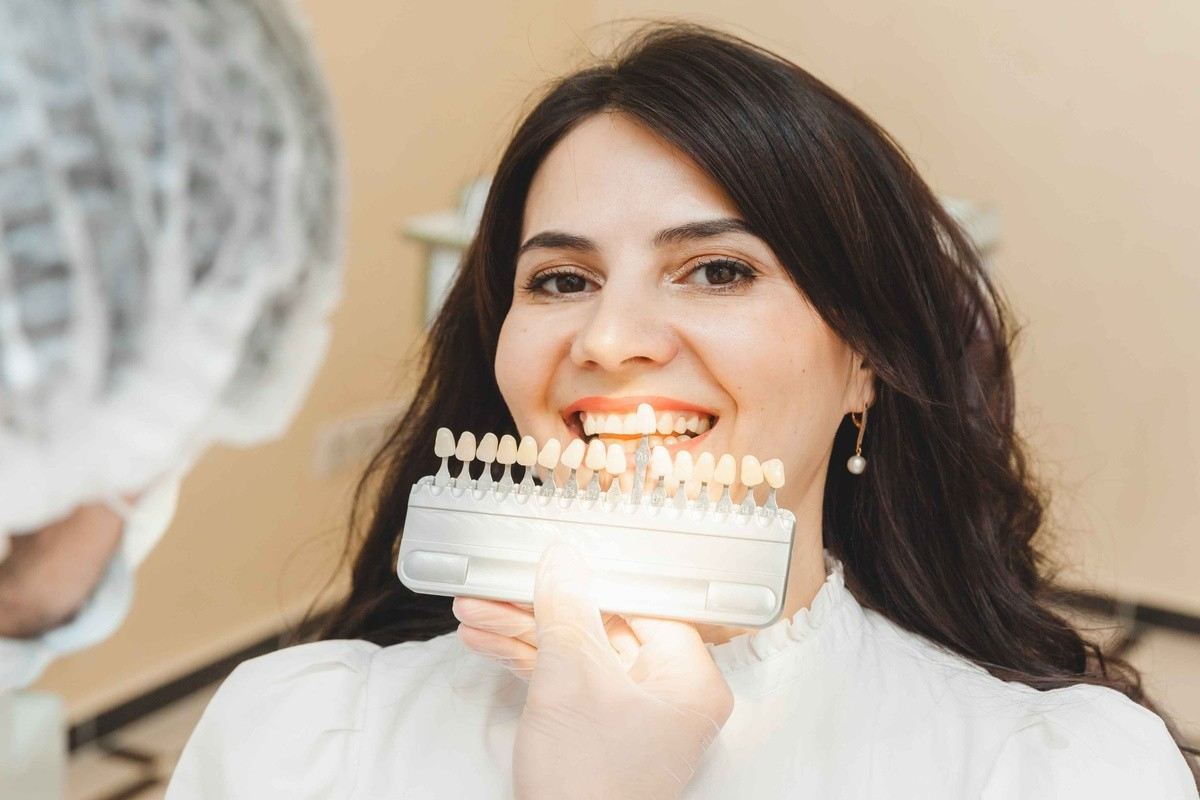
Veneers may help suitable patients improve the look of front teeth affected by chips, uneven edges, discoloration, worn enamel, small spaces, or shape concerns. Patients in Rockville should have enamel health, gumline balance, bite pressure, tooth color, old dental work, and oral health reviewed before treatment is planned. A dentist can explain whether one tooth or several teeth should be considered, what this option can change, what it cannot repair, and how maintenance affects long-term results.
A cosmetic concern does not always involve the whole smile. One front tooth may look darker. A chipped edge may keep catching attention. Old bonding may no longer match the nearby enamel. A patient in Rockville may wonder whether Veneers could improve one tooth or whether several teeth need to be planned together for balance.
The answer depends on the mouth, not only on the visible concern. The dentist needs to check out enamel, gums, bite pressure, tooth position, shade, and older dental work before recommending a cosmetic option. A single tooth may need very careful colour matching. Several teeth may need a broader smile design discussion. A good consultation should explain what can change, what has limits, and what should be treated before any cosmetic restoration is placed.
A Front-Tooth Change Starts with Diagnosis
A tooth can look uneven for several reasons. It may be chipped, rotated, stained, worn, naturally narrow, or surrounded by gum recession. The same concern can have different causes from one patient to another.
For suitable patients, Veneers may help improve the visible surface of selected front teeth. They are often discussed for shape, colour, edge, surface texture, or minor spacing concerns. The tooth underneath still needs enough healthy structure to support the plan.
The first step is diagnosis. If decay, cracks, gum inflammation, or heavy bite pressure are present; those concerns may need attention before appearance changes begin.
One Tooth Can Be the Hardest to Match
Treating one front tooth may sound simple, but it can be one of the most detailed cosmetic challenges. A single restoration has to match nearby natural teeth in shade, brightness, shape, length, surface texture, and gumline position.
Patients asking about single veneers often have one tooth that stands out after trauma, old bonding, a chip, or deeper colour change. The dentist may need photos, shade review, and a close look at the neighboring teeth before deciding what may blend well.
A one-tooth plan should be honest about matching. The goal is not only to improve that tooth, but to help it look like it belongs beside the others.
Several Teeth May Need Balance Planning
Sometimes one tooth bothers the patient most, but the full smile affects the result. If multiple front teeth have worn edges, uneven shapes, spacing, or colour differences, treating only one tooth may not create the balance the patient expects.
The dentist may discuss whether dental veneers should be considered for one tooth, a few teeth, or a broader visible area. This does not mean every tooth need treatment. It means the visible smile should be reviewed before a final choice is made.
Patients should ask which teeth show when smiling and speaking. That helps explain the treatment area.
Porcelain Options Need Careful Records
A patient researching porcelain veneers may be thinking about colour, smoothness, and long-term appearance. These restorations are usually made outside the mouth after the dentist gathers records and prepares the plan.
The dentist may review tooth shape, enamel, bite pressure, gumline, old fillings, and how much change is needed. Some teeth need little preparation, while others may need more based on position and goals.
Patients should ask what steps are involved, whether temporary coverage may be used, and how the result will be checked for fit and appearance.
The Gumline Shapes the Final Look
Gums frame the front teeth. Swollen gums can make teeth look shorter. Recession can make teeth look longer or darker near the root. Uneven gumlines can make a smile look less balanced even when the teeth themselves are healthy.
Before porcelain veneers are planned, the dentist may check for bleeding, tenderness, recession, and gum inflammation. Gum care may be recommended first if the tissue is not stable.
This step helps the final edges fit better and makes the appearance easier to judge. The gumline is part of the smile design.
Bite Pressure Can Affect Longevity
Front teeth help guide the bite. They also handle pressure during biting, speaking, and certain jaw movements. If the bite places heavy force on a front tooth, cosmetic restorations may chip, loosen, or need repair sooner.
The dentist may look for worn enamel, chipped edges, flat biting surfaces, cracked fillings, jaw soreness, or signs of grinding. These clues can change the recommendation.
A second use of Veneers belongs to this bite discussion because cosmetic restorations should be planned to work with daily function, not only with the smile at rest.
Old Bonding Can Change the Plan
Many patients have older bonding on their front teeth. Over time, bonding may stain, roughen, chip, or stop matching surrounding enamel. The tooth underneath should be checked before replacing or covering the area.
A second discussion of single veneers may happen when only one old bonding repair affects the smile. The dentist may decide whether the old material can be polished, repaired, replaced, or included in a new cosmetic plan.
If there is decay, leakage, or a crack near the old bonding, that concern should be handled before the final cosmetic choice is made.
What to Expect at the Consultation
Before the visit, patients should think about what bothers them most: colour, chips, spacing, tooth size, worn edges, old bonding, or one tooth that does not match. They should also mention sensitivity, grinding, gum bleeding, past trauma, and previous cosmetic treatment.
During a visit with Dr. Joseph Boesch, the dentist may examine enamel, gums, bite, tooth colour, old restorations, chips, spacing, and oral health. Photos, X-rays, shade records, or other planning steps may be recommended based on the concern.
After the exam, patients should understand whether cosmetic restorations may be suitable and what should happen first.
Preparation Depends on the Tooth
Some veneer plans involve preparing part of the front tooth surface. The amount depends on the tooth position, enamel, material choice, existing dental work, and the amount of change being planned.
Patients should ask whether preparation is expected, whether the change is reversible, and how the final restoration will be maintained. These questions matter because cosmetic restorations require long-term care.
A second mention of dental veneers belongs here because the process can include records, preparation, temporary coverage in selected cases, final placement, and follow-up.
What This Option Can Improve
For suitable patients, Veneers may improve visible colour, shape, size, edge length, surface texture, or selected minor spacing concerns.
They may be considered when whitening alone does not address the concern, when one tooth has an old repair that no longer blends, or when several front teeth need a more balanced appearance.
The benefit depends on enamel, gum health, bite pressure, shade matching, material choice, and daily habits after treatment.
What This Option Cannot Fix Alone
A third use of Veneers should be tied to clear limits. They cannot treat active gum disease, repair deep decay without proper restorative care, move teeth like orthodontics, or stop grinding habits on their own.
They may not be the right choice for teeth with very little healthy structure, heavy bite pressure, or untreated oral health concerns. Some patients may need whitening, gum care, bonding, crowns, orthodontic treatment, or another option instead.
Knowing the limits helps patients choose care that fits the real concern.
Local Patient Review
“I wanted to change one front tooth, but I did not realize shade matching and my bite mattered so much. The visit helped me understand the choices more clearly.”
A Natural-Looking Change Starts with Careful Planning
Achieving an ideal aesthetic starts with a comprehensive evaluation of tooth color, enamel, gum health, bite, old dental work, and shade matching. Patients in Rockville can make informed decisions when these factors are assessed together before treatment. Dr. Joseph Boesch can help determine if focusing on a single tooth or a broader cosmetic plan is best for your smile, explaining what to check first.
Frequently Asked Questions
Can one front tooth be treated by itself?
Sometimes. The dentist has to check shade, shape, bite, nearby teeth, and whether one tooth can blend naturally.
Do stained fillings get lighter with whitening?
No. Tooth-coloured restorations usually keep their shade and may need separate review if they are visible.
Why does the bite matter for cosmetic work?
Heavy pressure can chip teeth or restorations, so the bite should be checked before treatment is planned.
Can small gaps be closed cosmetically?
Sometimes, but the cause of the space should be reviewed before choosing a treatment.
Will the tooth need to be prepared?
Preparation depends on the material, tooth position, enamel, and amount of change being planned.
Can gum health affect the final look?
Yes. Swelling, recession, and uneven gumlines can change how teeth and restorations appear.
How long do cosmetic restorations last?
Longevity varies with material, bite pressure, oral hygiene, habits, and regular dental care.
What should I ask for the consultation?
Ask what caused the concern, what can change, what has limits, and what maintenance will involve.