
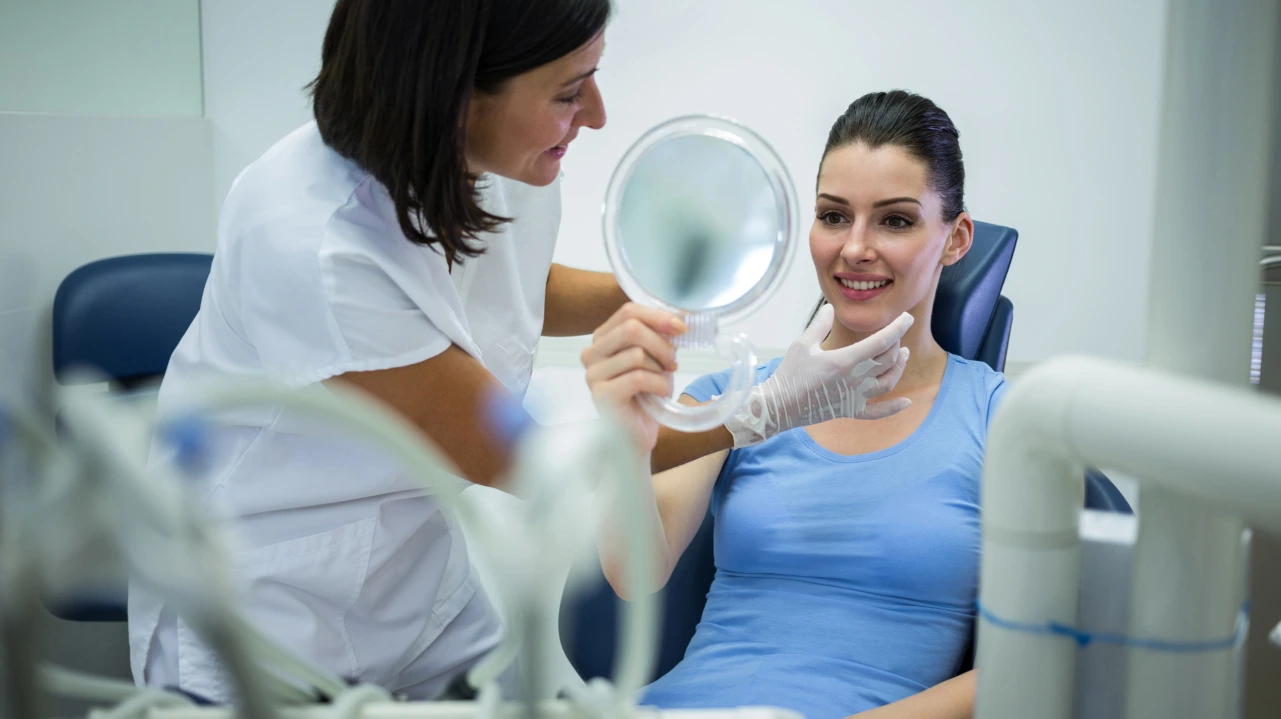
An AACD-accredited cosmetic dentist’s smile makeover begins with planning the whole result before any tooth is changed. The plan looks at the teeth, gums, bite, and face together, so each step supports the next one and the final smile looks balanced.
Accreditation from the American Academy of Cosmetic Dentistry reflects training in this kind of planning. This blog explains what accreditation involves, how a makeover is evaluated and designed, and how the results are kept healthy over the coming years.
AACD Accreditation and Cosmetic Training
AACD accreditation has three parts. A dentist passes a written exam and two workshops, submits clinical cases for examination, and then completes an oral exam. The whole process has a five-year time limit.
Accredited members must also meet maintenance requirements every three years. In practical terms, AACD cosmetic dentistry training is judged on documented cases and not only on coursework.
Starting With a Full Evaluation
A complex smile makeover rarely involves one tooth. Esthetic treatment planning begins with a review of the whole mouth.
- Photographs and impressions or scans record how the teeth, lips, and face relate to each other.
- A gum and bone check confirms the foundation is healthy enough for cosmetic work.
- A bite evaluation shows whether grinding or uneven contact could damage new restorations.
- Existing fillings, crowns, and veneers are reviewed for fit and condition.
Any active decay or gum disease is treated first. Healthy tissue gives cosmetic work a stable base.
Smile Design and Trial Smiles
Smile design turns the evaluation into a visual plan. A diagnostic wax-up shapes the proposed teeth on a model so tooth position, length, and bite can be studied.
From that model, a mock-up can be placed over the natural teeth. This trial smile lets a patient see and comment on the proposed shapes before irreversible work begins. The wax-up also shows when orthodontics or gum reshaping should be part of the plan.
Choosing the Right Restorations
Porcelain veneers and smile design are often part of a makeover, although the right mix depends on each mouth. Veneers can reshape front teeth. Crowns may suit teeth with large fillings or heavy damage.
Cosmetic dental reconstruction combines these choices when several teeth need attention. Restorative dentistry decisions focus on keeping as much healthy tooth structure as the design allows. Aligners, whitening, or gum contouring may be added before final restorations so less tooth reshaping is needed.
Maintenance and Follow-Up Care
A finished smile still needs long-term care. Preventive dentistry keeps the gums and surrounding teeth healthy, which protects the margins of veneers and crowns.
Follow-up care usually includes regular exams and cleanings. A custom nightguard may be advised for patients who grind or clench. Photographs taken at the end of treatment give a reference for later comparison.
Cosmetic Dentistry in Rockville
At Joseph M. Boesch DDS PC on West Edmonston Drive in Rockville, Maryland, we have served patients since 1986. Dr. Joseph M. Boesch is a member of the American Academy of Cosmetic Dentistry. We offer porcelain veneers, teeth whitening, and a smile analysis.
Patients who want to understand how a makeover might be planned are welcome to ask us about a smile analysis at our office. We also provide Invisalign clear aligners and nightguards, which can support planning and help protect finished cosmetic work.
Planning a Smile Makeover in Rockville, MD
A complex makeover works when planning, design, and upkeep are treated as one process. Patients in Rockville who want to explore a smile makeover are welcome to review options with our team at Joseph M. Boesch DDS PC and ask about veneers and smile analysis.
Frequently Asked Questions
What makes a cosmetic plan conservative rather than simply changing every front tooth?
A conservative plan changes only the teeth that need it. We weigh how much natural enamel would be removed and choose the smallest change that reaches the goal. Teeth that blend well often stay.
Can old cosmetic restorations be replaced as part of a comprehensive smile makeover?
Yes. Older veneers or crowns that are worn, stained, or poorly fitted can be replaced so the whole smile matches. Healthy restorations may be kept when they blend well. An exam with us shows which ones are sound.
How are shade and translucency selected for natural-looking porcelain restorations?
Shade is matched against neighboring teeth under controlled lighting, often with photographs sent to the dental laboratory. Translucency is built into layers of porcelain, since natural enamel lets light through at the edges. Whitening usually comes first.
How are tooth shape, facial features, and the smile line evaluated together?
We study the smile at rest and in full expression. The midline, front tooth edges, and lip line are compared with the face. Gum display in a wide smile is often about 1 to 3 millimeters.
What does the process involve once a plan is approved?
Treatment usually follows a set order. Gum health and any needed orthodontics come first, followed by tooth preparation and temporary restorations. We place final restorations after fit, color, and bite have been checked.