
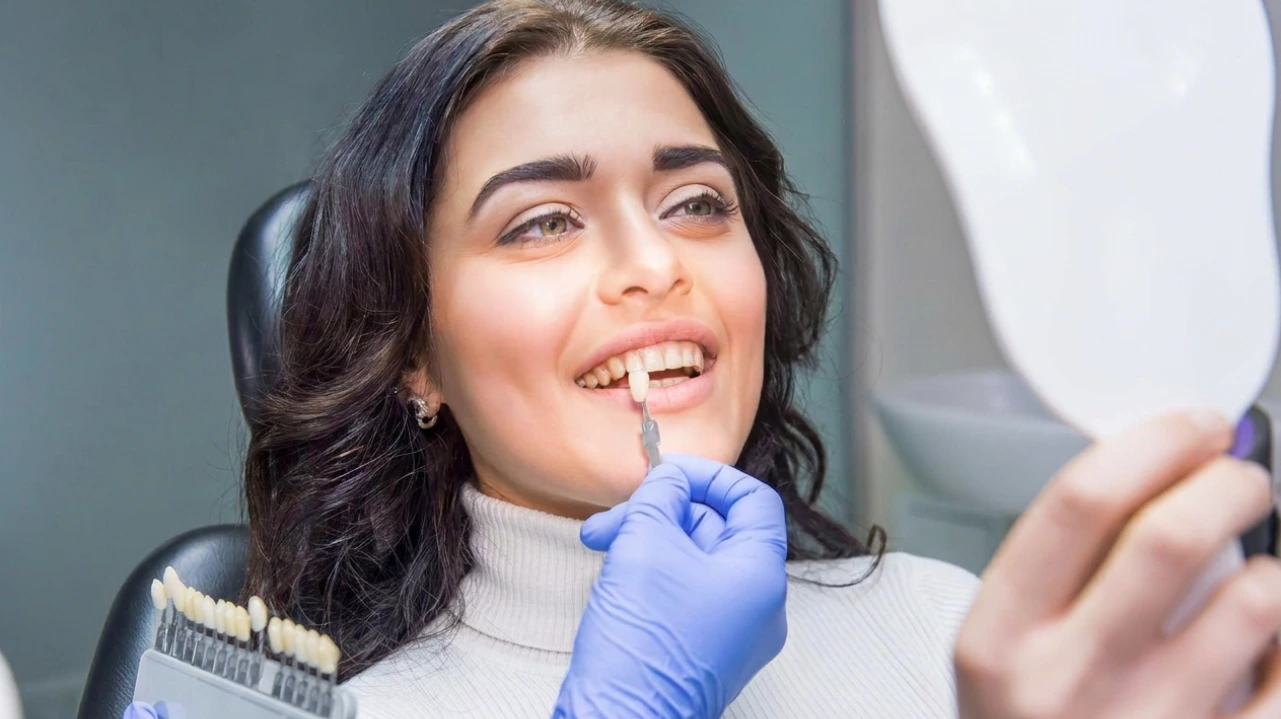
Worn teeth can make a smile look older than it feels. Porcelain veneers improve worn teeth without looking artificial when they restore natural length and edge shape, match the neighboring teeth, and are planned around the bite.
Restraint is what keeps the result believable. Thin shells, small changes in length, and careful attention to shade and surface texture preserve the character of the original teeth while rebuilding what wear has taken away, and a smile analysis helps set the plan.
How Porcelain Veneers Restore Worn Edges Without Looking Artificial
Years of chewing, grinding, or acid can shorten and flatten the edges of front teeth. Porcelain veneers rebuild that lost edge with a thin shell bonded to the front surface.
The goal is to restore the length the teeth once had, not to add length for its own sake. Keeping changes modest keeps the teeth in proportion with the lips and face.
Which Types of Wear and Shape Problems Suit Porcelain Veneers
Veneers suit teeth with worn edges, small chips, uneven shapes, minor gaps, or staining that does not respond to whitening. They are meant for teeth that are otherwise healthy.
Teeth with large cracks or extensive damage may be better served by crowns, which the dentist explains during the consultation.
How Smile Proportions Keep Veneers Slim and Natural
A veneer sits on the surface of the tooth, so its thickness has to be planned. Removing a small, measured amount of enamel leaves room for the porcelain without making the tooth look larger.
Width and length are planned against the neighboring teeth, the smile line, and the lips, so the finished teeth look balanced rather than oversized.
How Thin Veneers Support Enamel Preservation
Thin porcelain veneers need less tooth reduction, which helps preserve enamel. Enamel bonds more reliably than the layers beneath it, so keeping it supports a durable result.
A 2023 systematic review of thin and ultrathin veneers described their clinical outcomes in worn teeth as promising, while noting that few clinical studies exist.
Which Shade, Translucency and Texture Choices Match Natural Teeth
Porcelain can be layered to copy the slight translucency of natural enamel, especially near the edges. Surface texture, such as faint horizontal lines, is added so light reflects the way it does on neighboring teeth.
Shade is selected with the neighboring teeth in view, since a veneer that is slightly too bright or too flat stands out in a smile.
How a Smile Analysis Shapes the Veneer Plan
A smile analysis reviews the teeth, gums, and bite, often with photographs and digital X-rays. These records show how much wear is present and what the finished smile could look like.
Because wear often involves the bite, veneers are planned around how the teeth meet, so new edges are comfortable and protected.
Benefits of Natural-Looking Veneers for Worn Teeth
Rebuilding worn edges improves how the smile looks and how the front teeth meet when biting. Porcelain resists staining, so the result keeps its color with routine care.
Veneers also cover the worn tooth surface, though the benefits depend on the case and the dentist explains what to expect.
How Long-Term Care Protects Veneers
Daily brushing, flossing, and regular preventive visits keep veneers and the surrounding gums healthy. Avoiding habits such as biting ice or pens reduces the chance of chipping.
Staying with a regular recall schedule lets the dentist check the veneers, the bite, and the gums over the years.
Porcelain Veneers With Dr. Joseph Boesch
Dr. Joseph Boesch in Rockville, MD, provides porcelain veneers alongside smile analysis, teeth whitening, and Invisalign. He earned his Doctor of Dental Surgery degree at Georgetown University in 1986 and has made jaw function and the bite a focus of his continuing education.
An intraoral camera helps patients see their teeth up close during planning. Patients from Rockville and the surrounding area are welcome to ask whether veneers suit their worn teeth, and the team explains each step.
Porcelain Veneer Questions in Rockville, MD
Natural-looking results come from careful planning and modest changes. Dr. Joseph Boesch’s practice welcomes questions about veneers and worn teeth from patients in Rockville and nearby communities.
Frequently Asked Questions
How can grinding or clenching affect veneers over time?
Heavy grinding or clenching can chip or wear porcelain, just as it wears natural enamel. Planning the bite carefully and discussing protective options with the dentist helps veneers last longer over the years.
When should whitening be completed before selecting a final veneer shade?
Whitening should be finished first, because it changes natural teeth but not porcelain. Once the teeth have settled at their new shade, the veneer color is chosen to match them closely.
Can clear aligners reduce the amount of tooth reshaping needed before veneers?
Yes, when crowding or uneven positions are corrected first, less enamel may need to be reshaped to make veneers fit well. The dentist advises whether aligners add value for a particular smile.
What happens when the gumline changes after veneers have been in place for years?
If gums recede, the edge of a veneer or part of the tooth beneath can show. Regular checkups track the gumline, and options such as adjusting or replacing a veneer can be discussed if the look changes.